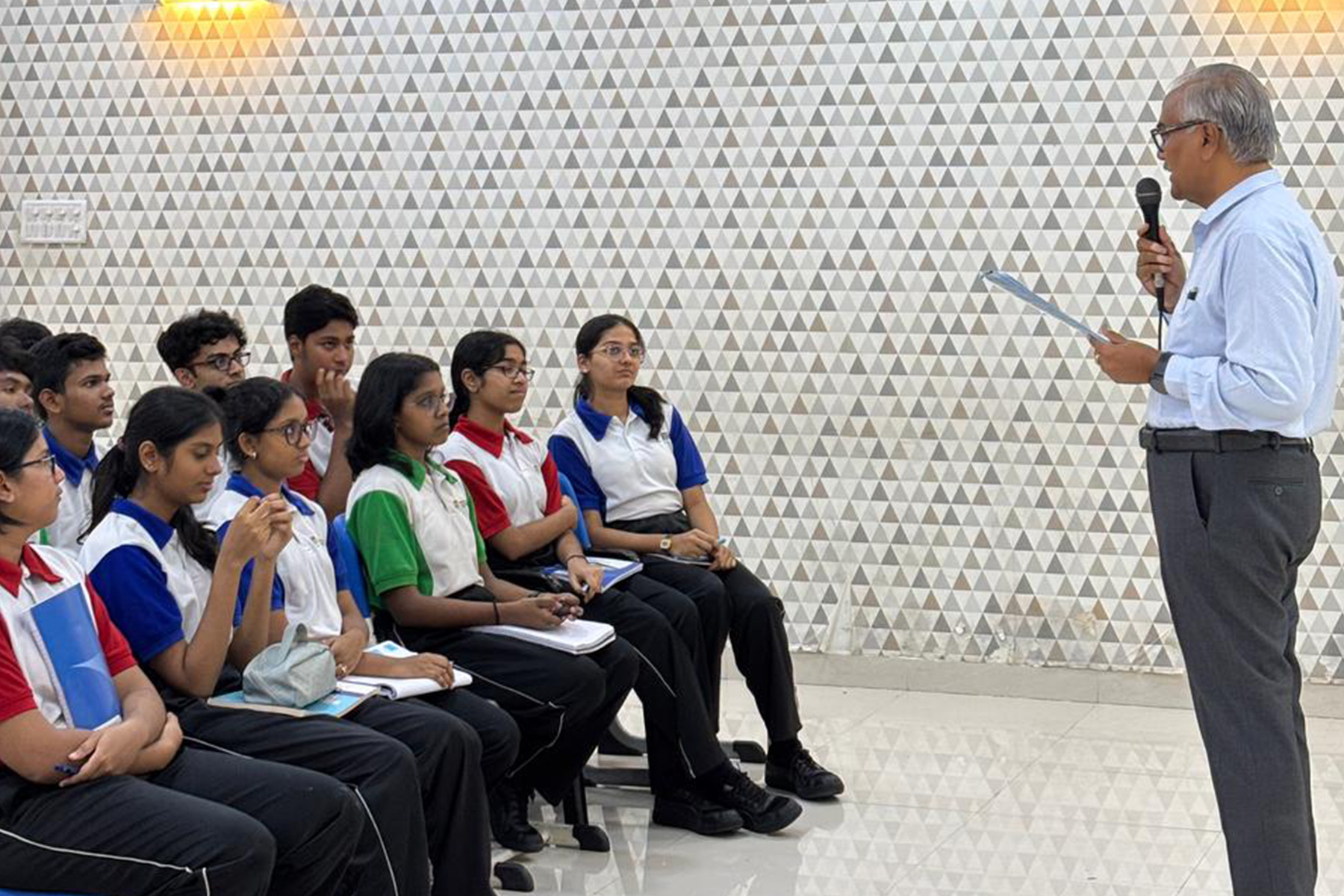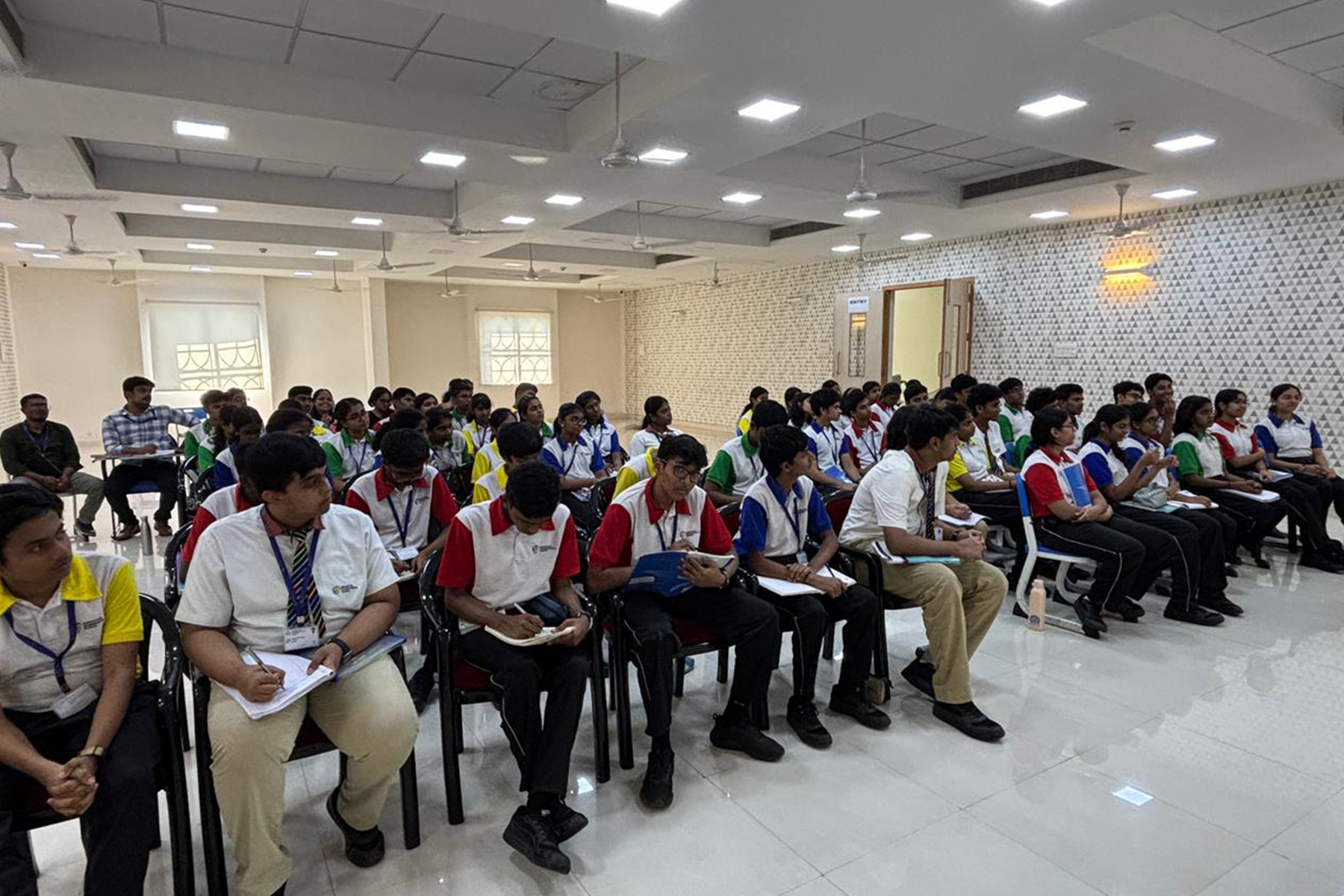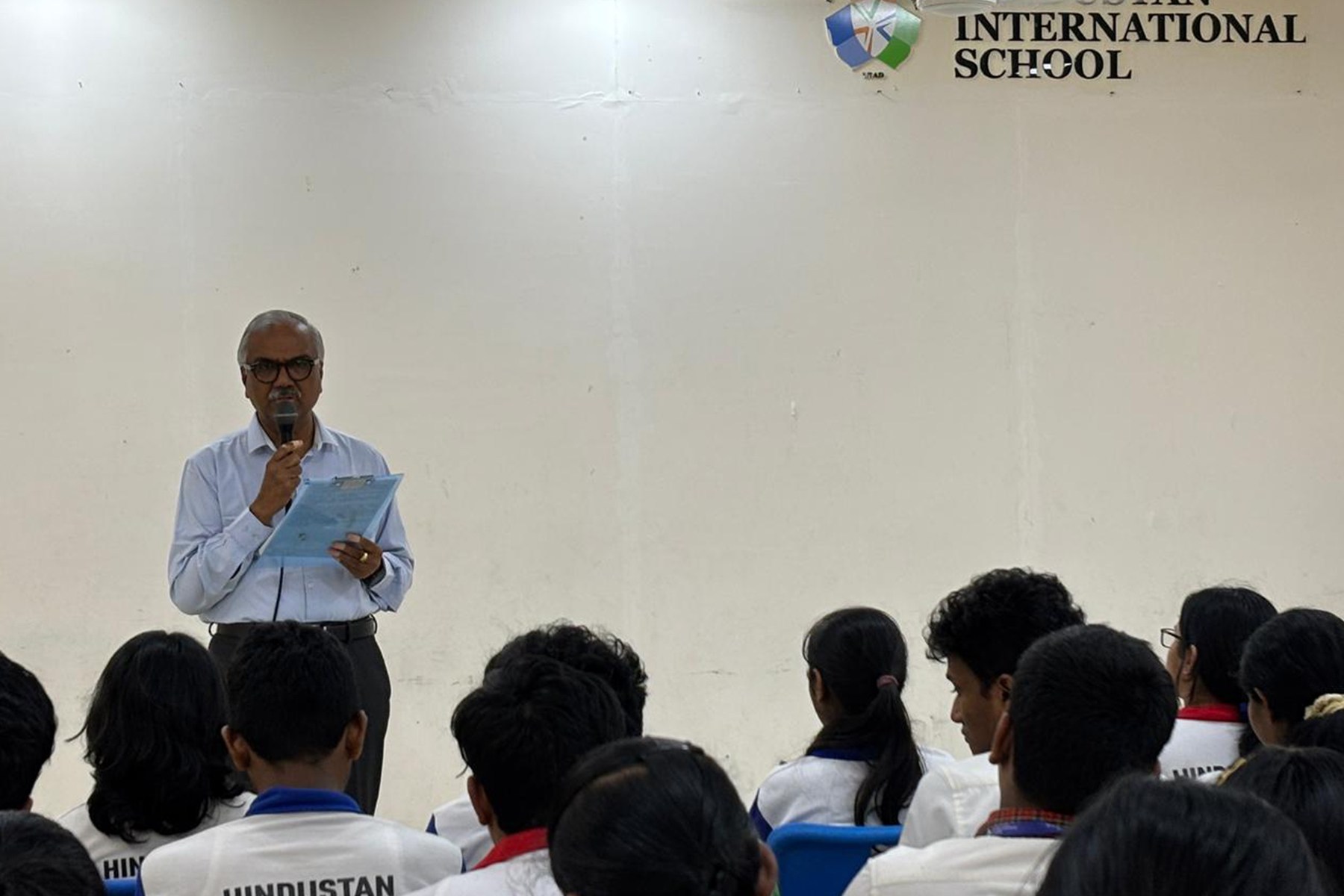
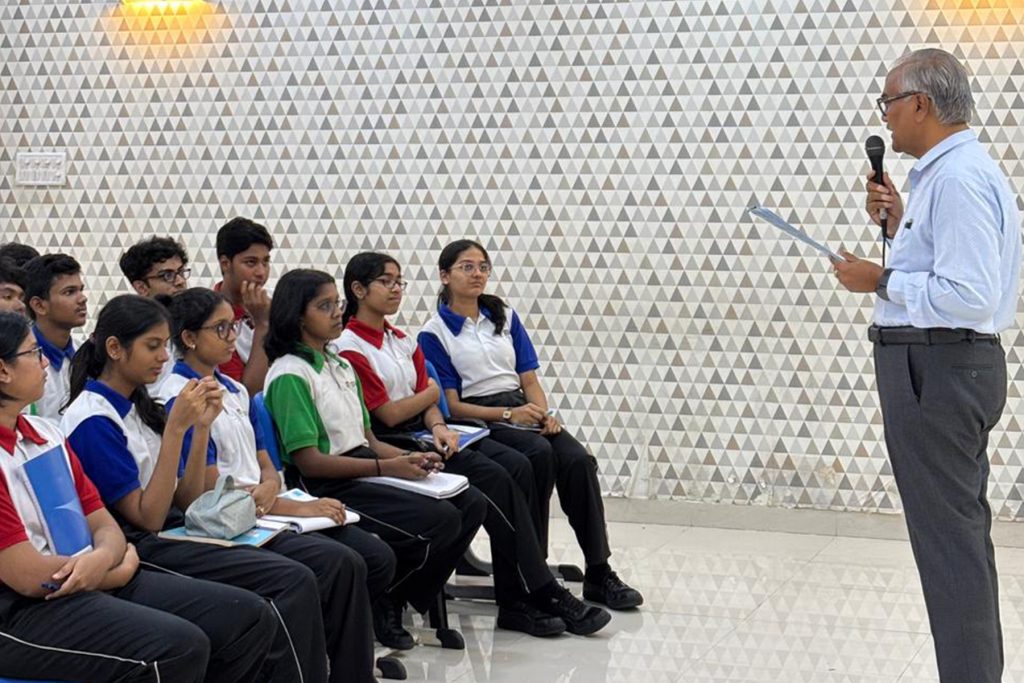
Building Foundations for Academic Success
Date : 24/03/2026
Day : Tuesday
Timings : 2:10 PM to 3 PM
Organized by : HISG
Resource person : Mr. JOHNSON MATHEW, Dean Academics
Attendees : Grades 10 to 12
Venue : Hall of Fame, Hindustan International school
1.Introduction
The session focuses on student awareness, academic planning, learning strategies, and personal responsibility in education, particularly within the IGCSE learning journey.
2. Key Themes Identified
2.1 Awareness and Academic Positioning
The session began by emphasizing the importance of students being aware of:
- Their current academic standing
- The competitive nature of course availability
- The relationship between marks, market demand, and opportunities
Students were encouraged to understand that:
- Limited seats in courses increase competition
- Academic performance directly impacts future opportunities
2.2 Learning Beyond Textbooks
A strong focus was placed on conceptual learning:
- Moving beyond textbook knowledge
- Developing clear understanding instead of rote learning
- Emphasizing application of knowledge
Key ideas included:
- Avoiding confusion through clarity
- Focusing on long-term comprehension
- Recognizing learning as a shared effort between student and teacher
2.3 Development of Critical Thinking Skills
Students were encouraged to:
- Think critically and independently
- Develop analytical skills
- Enhance problem-solving abilities
Additionally:
- Answering questions should reflect understanding from a teacher’s perspective
- Learning should be viewed as a continuous journey, not just exam preparation
2.4 Achieving Academic Excellence
Excellence was linked to:
- Consistent effort over time
- Developing habits early in a student’s academic life
The session highlighted:
- The importance of discipline and perseverance
- Continuous improvement rather than short-term success
2.5 Consistency and Feedback
Students were advised to:
- Maintain consistency in studying and lesson engagement
- Build strong fundamental concepts
Other key points:
- Actively work on teacher feedback
- Maintain a balanced learning environment at home and school
- Avoid dependency on others for academic success
2.6 Managing Challenges and Setbacks
The notes reflect awareness of:
Fear and setbacks as part of the learning process
Students were encouraged to:
- Stay resilient
- Learn from mistakes
- Continue progressing despite difficulties
2.7 Essential Academic Habits
Important academic habits highlighted include:
- Daily revision practices
- Previewing upcoming topics
- Asking questions without hesitation
- Addressing difficulties immediately
Additionally:
- Developing skills and habits gradually
- Learning to be organized and disciplined
2.8 Ownership of Learning
A key message was:
“Learning is your responsibility.”
This includes:
- Taking ownership of one’s education
- Understanding the difference between:
- Hard work
- Smart work
Students were also introduced to:
- Backward planning techniques
- Focusing on expected outcomes and structured preparation
2.9 Stress Management and Confidence
Stress was addressed as:
- A natural part of academic life
Suggested solutions:
- Consistent preparation
- Developing clarity in concepts
- Building confidence through practice
2.10 Lifestyle and Long-Term Perspective
Students were advised to:
- Maintain a disciplined academic lifestyle
- Avoid:
- Copying
- Ignorance of core concepts
A long-term perspective was emphasized:
- Academic habits should support future success over the next 5 year
3. Conclusion
The session provided a comprehensive framework for academic success by integrating:
- Conceptual understanding
- Consistency and discipline
- Critical thinking skills
- Personal responsibility
Overall, the guidance reinforces that academic excellence is not achieved through short-term effort, but through:
- Continuous learning
- Self-discipline
- Active engagement with the learning process
Based on the session, the following actions are recommended for students:
- Develop a daily study routine
- Focus on conceptual clarity rather than memorization
- Actively seek and apply feedback
- Practice independent thinking and problem-solving
- Adopt long-term academic planning strategies
- Build resilience to handle academic stress and setbacks