CAMBRIDGE TEACHER SUPPORT PROGRAMME 2026–27
A2 Key and B1 Preliminary
DATE: 06 June 2026
DAY:Saturday
VENUE: Hindustan International School, Guindy
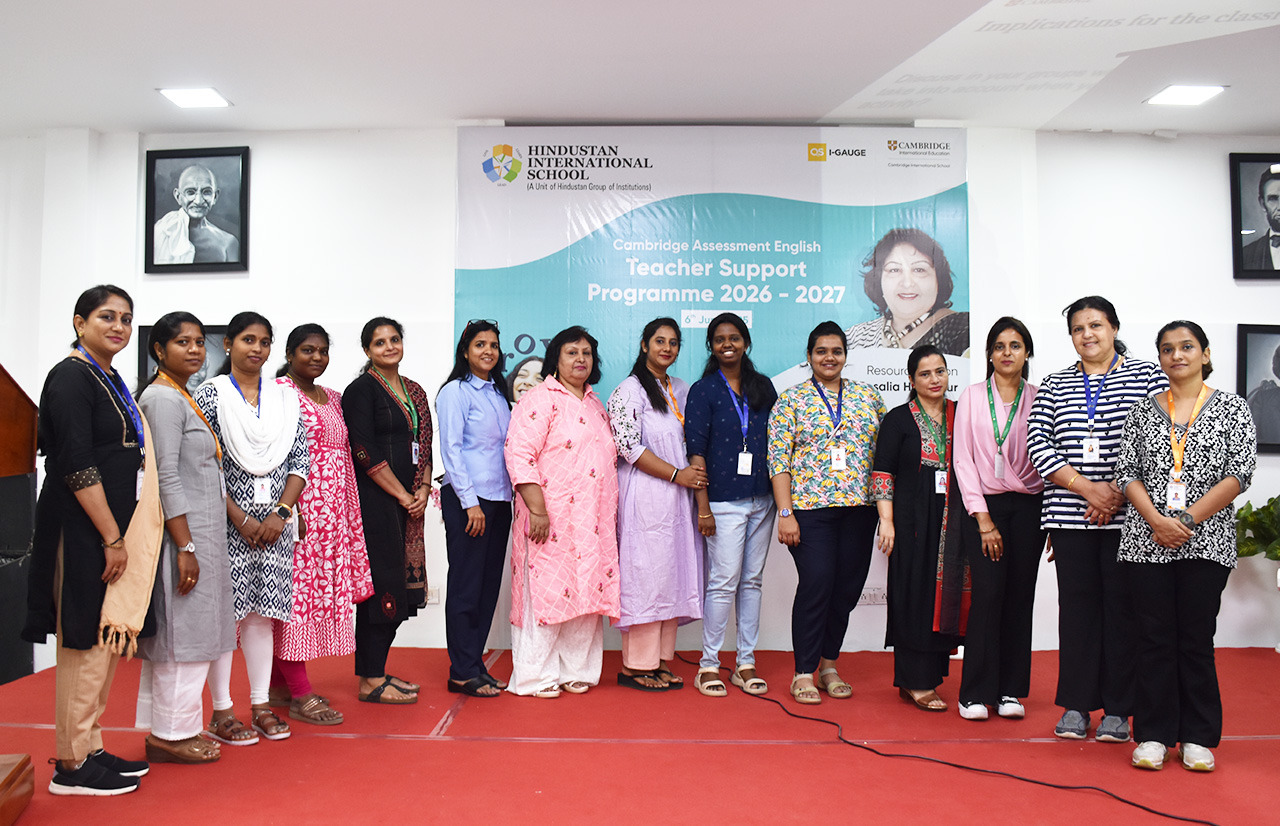
RESOURCE PERSON: Dr Rosalia H. Bonjour, Professor, St John’s College, Cambridge University Press & Assessment
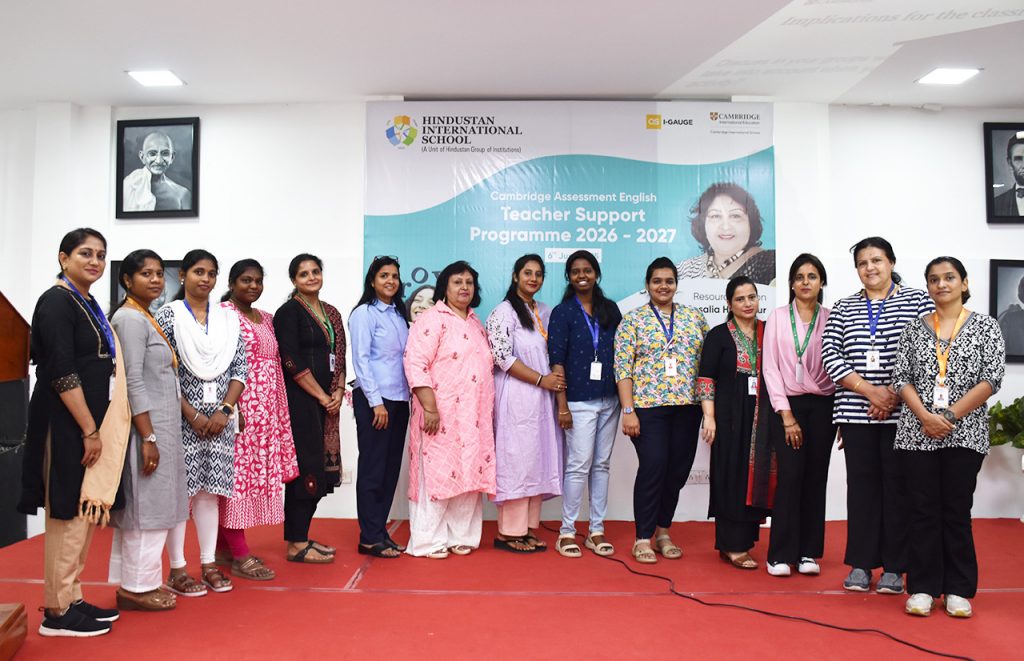
PARTICIPANTS: 13 Educators from HIS Guindy, HIS Padur, and HIS Karapakkam Campuses
Introduction
The Cambridge Teacher Support Programme 2026–27 for CAE Educators on A2 Key and B1 Preliminary was organized under the visionary leadership of Dr. Anand Jacob Verghese, Chairman, Hindustan Group of Institutions, with the objective of enhancing the professional competencies of Cambridge educators across campuses. The programme brought together 13 educators from the Guindy, Padur, and Karapakkam campuses, providing them with an opportunity to engage in meaningful professional learning and exchange of best practices.
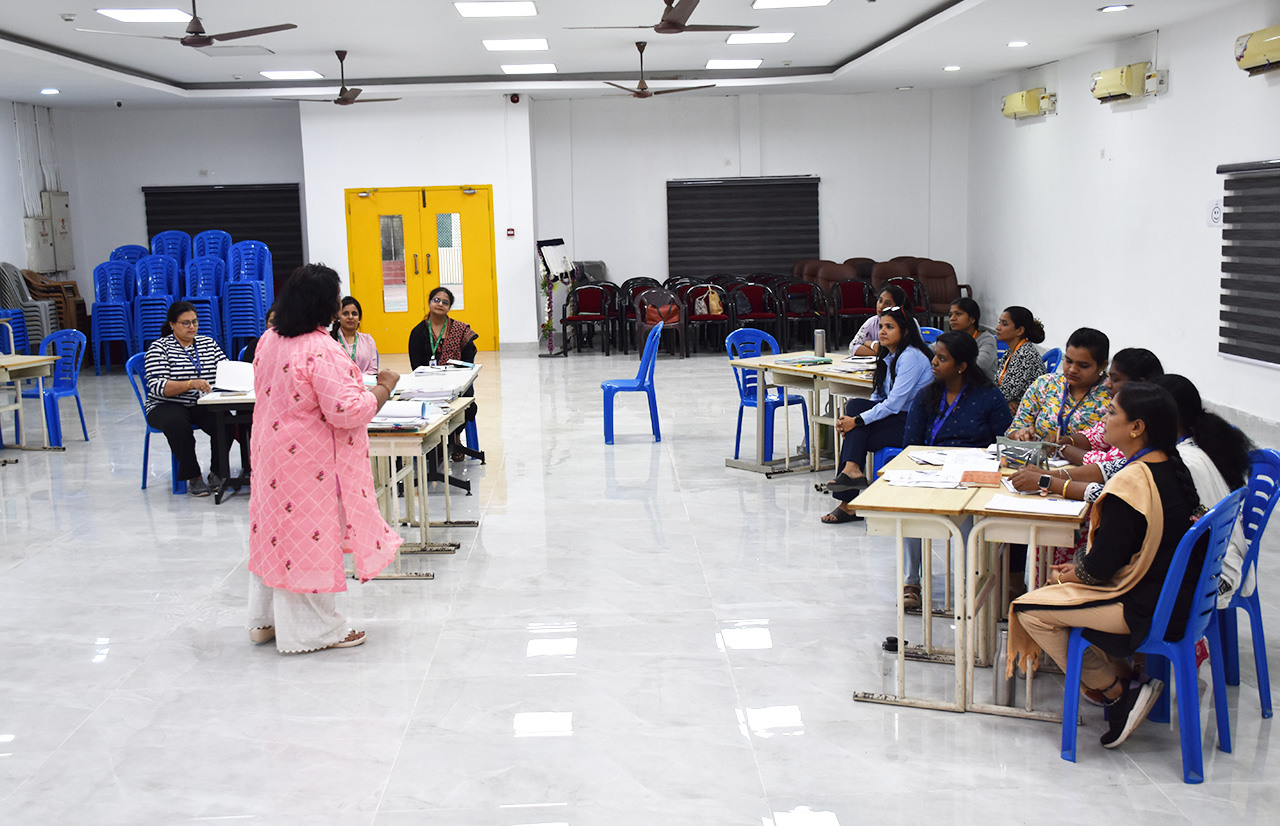
The session commenced with a warm Welcome Address by Ms. EstherFedora, who welcomed the participants and highlighted the significance of continuous professional development for educators. The resource person, Dr. Rosalia H. Bonjour, was formally felicitated by Ms. Sheema as a gesture of appreciation and respect. Through her expertise and engaging facilitation, Dr. Rosalia guided participants through a series of interactive activities and practical strategies aimed at strengthening the teaching of the four communication skills—Listening, Speaking, Reading, and Writing—in the Cambridge classroom.
Objectives
- To familiarize teachers with effective strategies for teaching A2 Key and B1 Preliminary learners.
- To strengthen the teaching of the four communication skills.
- To provide hands-on experience through collaborative and interactive activities.
- To equip educators with practical classroom resources and teaching methodologies.
- To encourage learner-centred and communicative approaches in language teaching.
Session Highlights
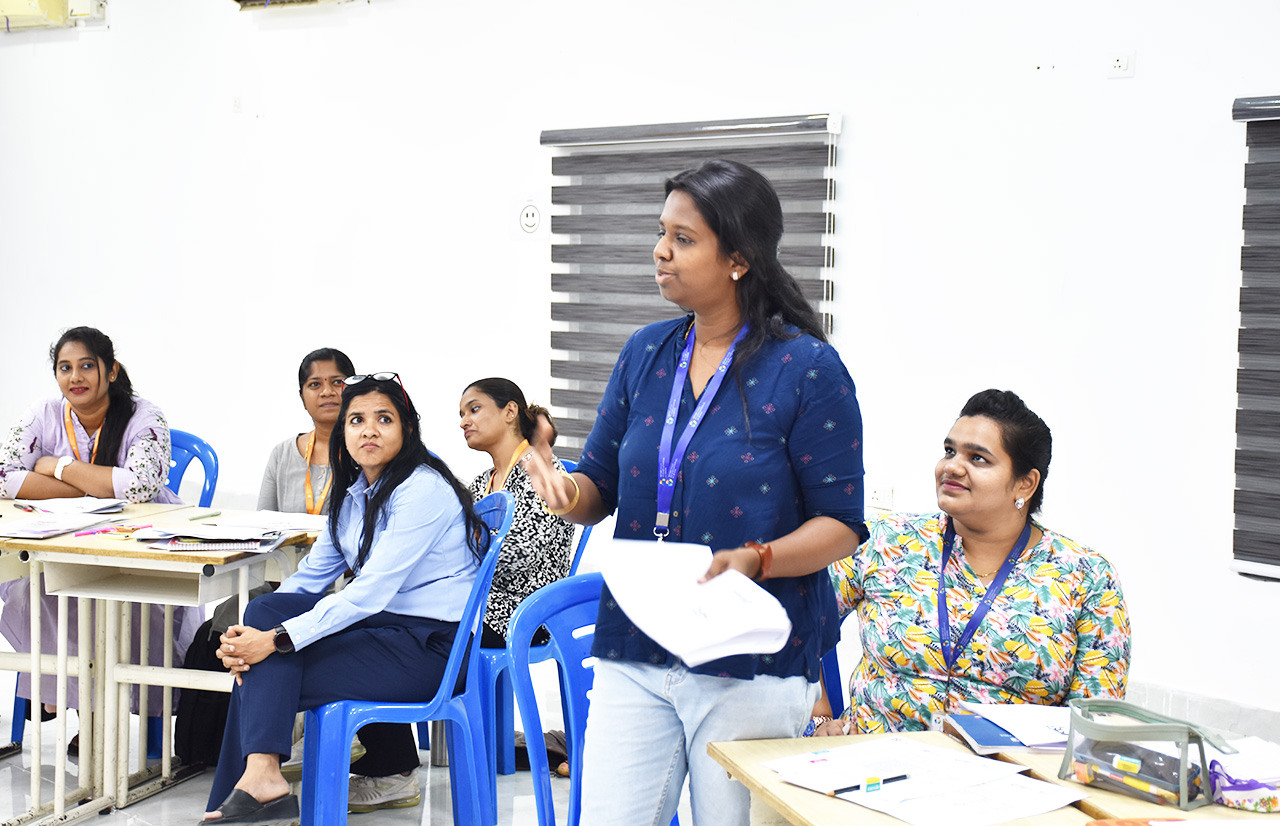
Dr. Rosalia H. Bonjour engaged the participants through a variety of collaborative activities designed to demonstrate effective language-learning practices and classroom engagement techniques.
The session commenced with an ice-breaking activity that encouraged participants to interact with one another and build rapport by asking questions and getting acquainted with colleagues from different campuses. This activity highlighted the importance of communication and interaction in creating a positive learning environment.
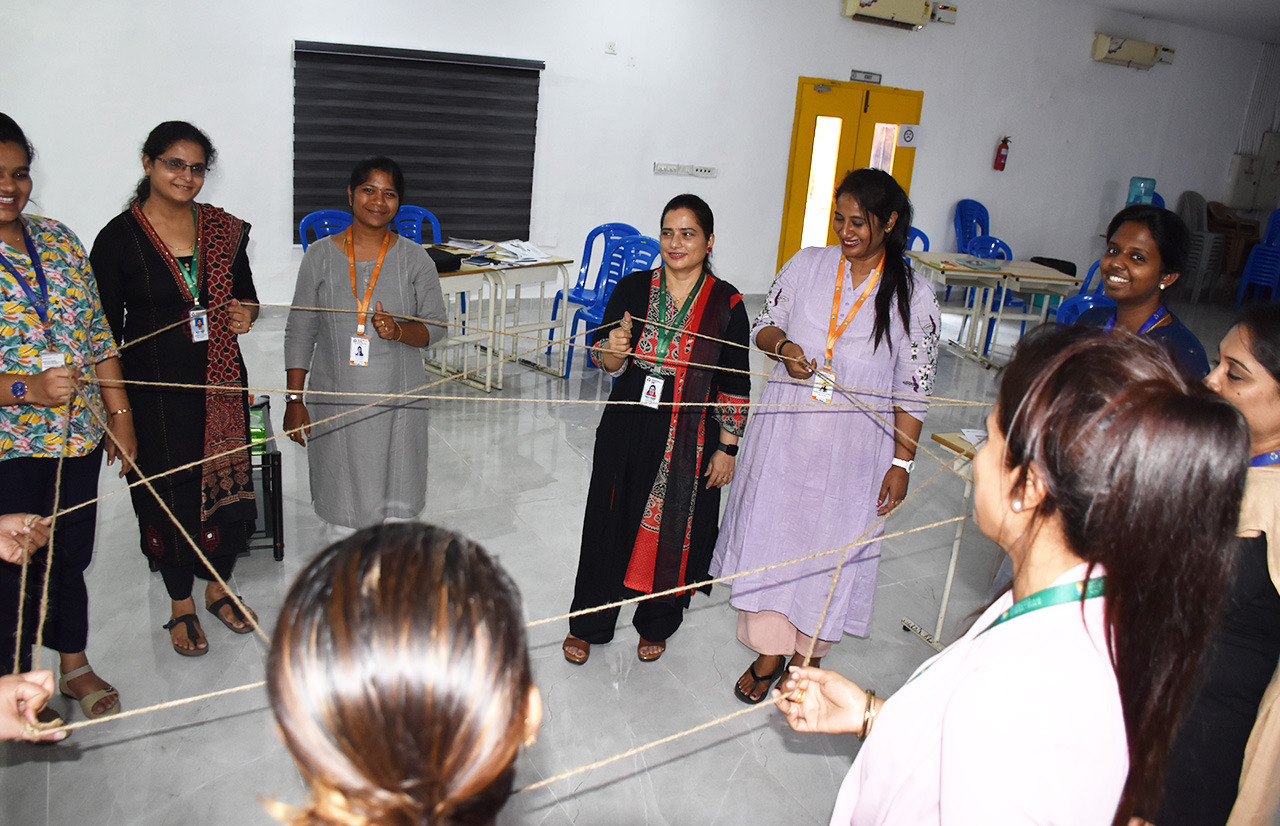
One of the engaging activities conducted was the “Thread Ball” activity, which demonstrated the significance of collaboration, active participation, and meaningful communication among learners. The activity also emphasized how interactive tasks can promote confidence and engagement in language classrooms.
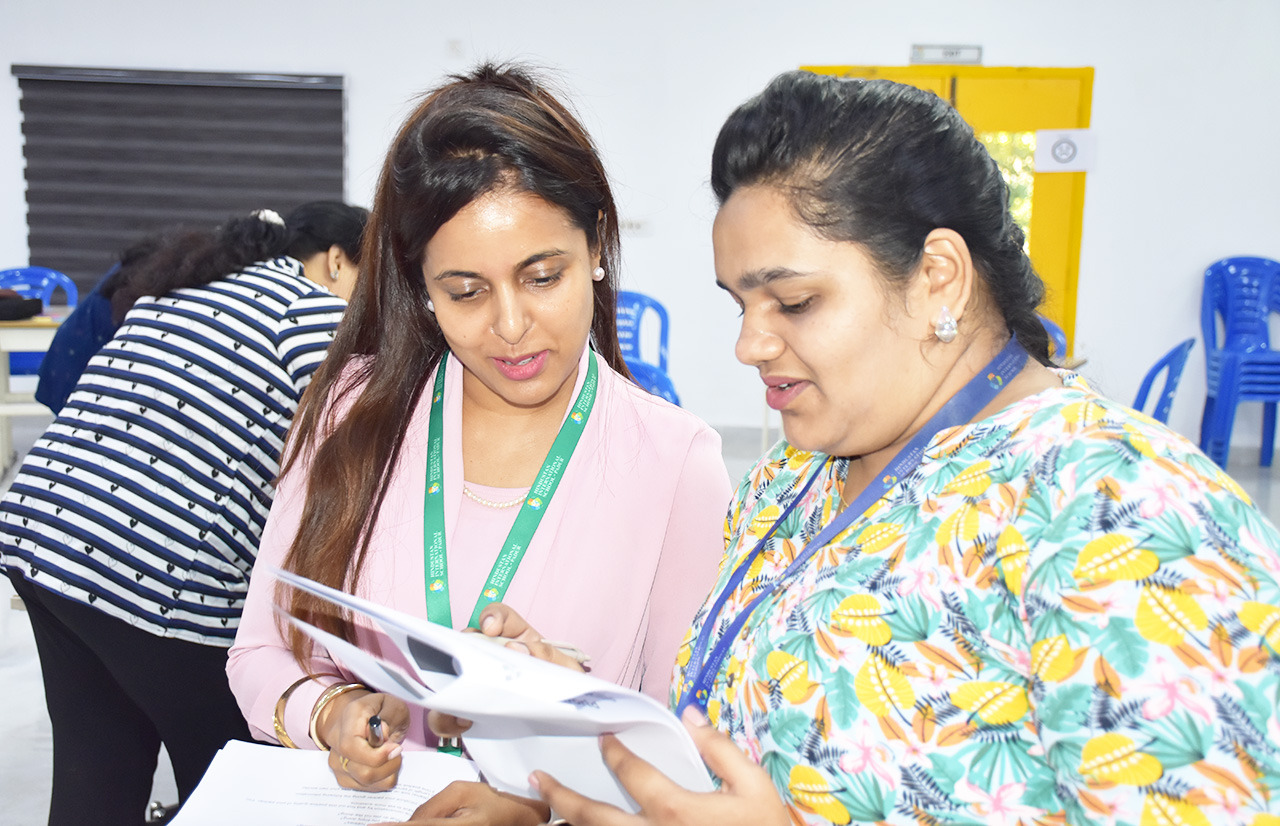
Participants were further involved in word-search and vocabulary-building exercises, where they were required to identify and locate words from a table of letters. This activity showcased practical methods for enhancing vocabulary acquisition and developing learners’ observation and reading skills.
Throughout the programme, the resource person incorporated activities addressing all four language skills:
- Listening through guided tasks and discussions.
- Speaking through interaction, questioning, and collaborative activities.
- Reading through comprehension-based exercises and vocabulary tasks.
- Writing through structured activities and classroom applications.
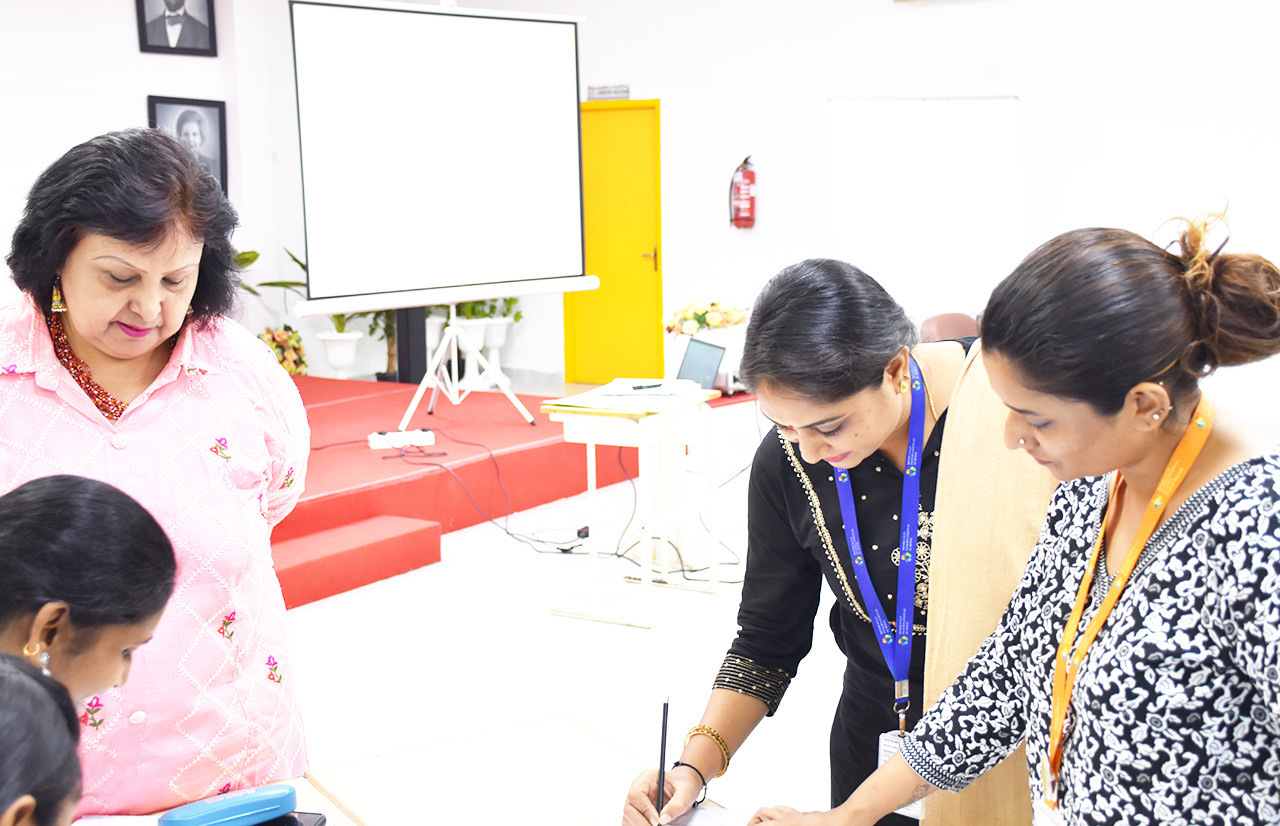
The trainer also provided participants with a variety of handouts, worksheets, and reference materials, enabling them to explore classroom-ready activities and assessment-focused strategies that could be effectively implemented with students preparing for Cambridge examinations.
Learning Outcomes
By the end of the programme, participants:
- Gained valuable insights into teaching strategies aligned with Cambridge Assessment standards.
- Enhanced their understanding of developing the four communication skills in an integrated manner.
- Acquired practical classroom activities to improve learner engagement and participation.
- Became familiar with a range of resources and handouts that can support effective language teaching.
- Strengthened their ability to create interactive, learner-centred classroom experiences.
Conclusion
The Cambridge Teacher Support Programme proved to be an enriching and professionally rewarding experience for all participants. Through a blend of hands-on activities, collaborative learning, and practical resources, Dr. Rosalia H. Bonjour successfully demonstrated effective approaches to language teaching and assessment. The session equipped educators with valuable tools and strategies that will enhance classroom practices and support student success in the A2 Key and B1 Preliminary Cambridge examinations.
The programme concluded with a heartfelt Vote of Thanks delivered by Ms Esther Fedora, who expressed gratitude to the resource person, organizers, and participants for making the session meaningful and impactful.