Practical insights in Cambridge checkpoint
Date: 02nd September 2026
Day: Wednesday
Timing: 9.00 am – 2.00pm
Resource Person: Ms. Carolyn Tiller
Attendees: Educators handling checkpoint across Tamil Nadu and Karnataka
Venue: VIBGYOR International School, Bangalore
Introduction
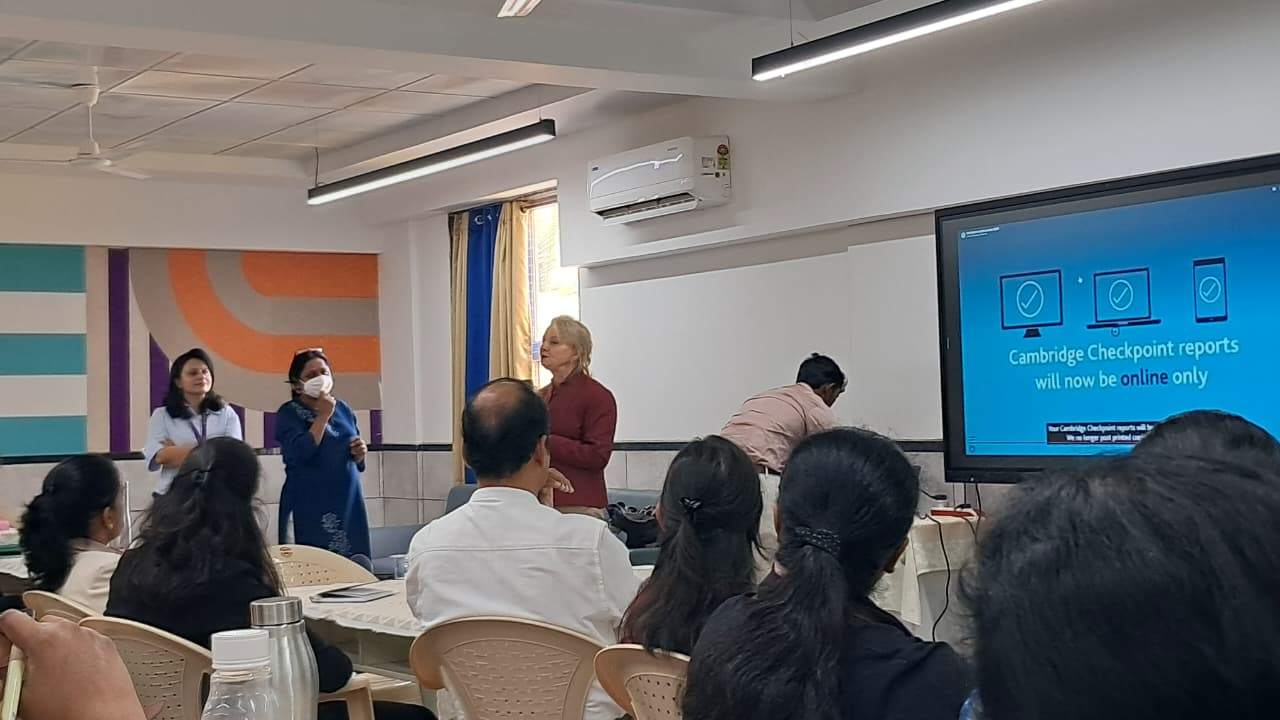
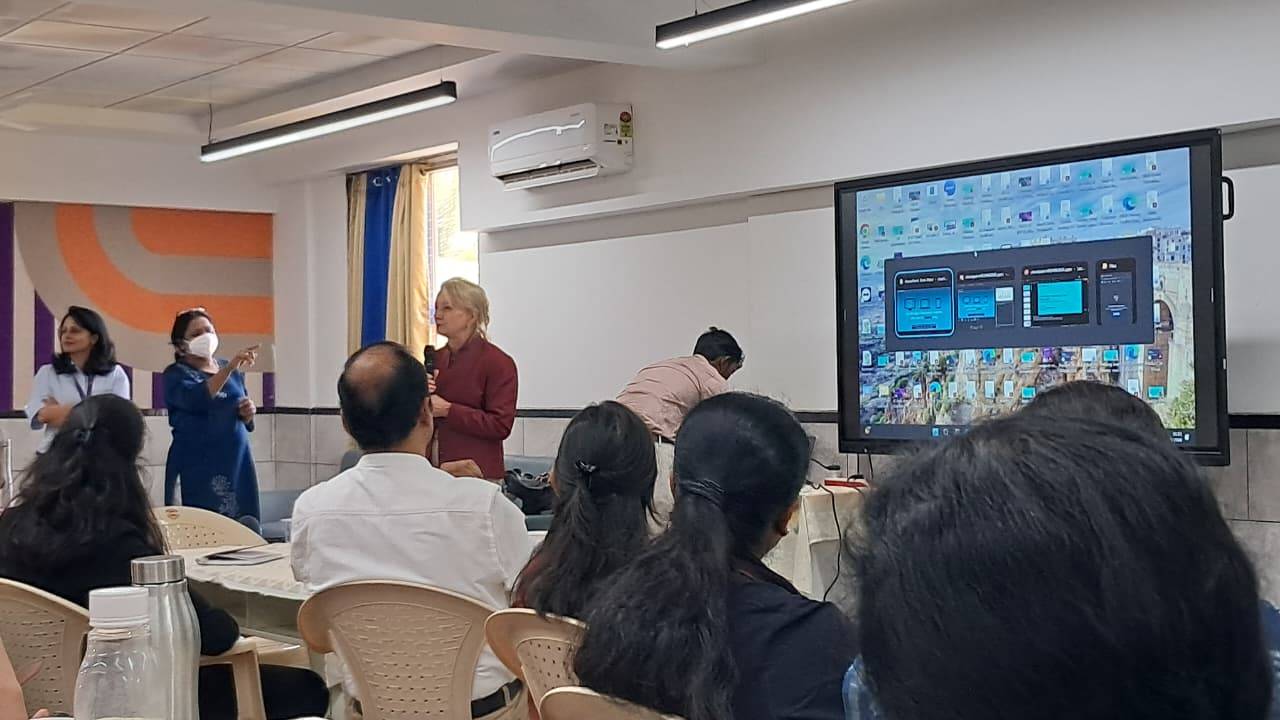
The Leadership Forum workshop provided valuable insights into the Cambridge pathway, effective teaching and assessment practices, learner progression, differentiated learning, and strategies to improve learner performance in Cambridge Checkpoint examinations.
The session was highly interactive and focused on enabling teachers to use assessment evidence effectively to identify learner needs, provide appropriate support, monitor progress, and plan strategies for continuous improvement.
Understanding the Cambridge Pathway
The workshop began with an introduction to the Cambridge Pathway and how different subjects contribute to the overall development of learners. The resource person highlighted that each subject develops a distinct set of knowledge and skills while also complementing the learning taking place in other subjects.
Some of the key connections discussed were:
- Science connects knowledge, skills and enquiry, encouraging learners to understand scientific concepts, apply their knowledge and investigate questions using evidence.
- Languages develop essential communication skills such as reading, writing, listening and speaking.
- Mathematics combines techniques and reasoning, enabling learners not only to perform calculations but also to understand, justify and apply mathematical concepts.
The discussion emphasised the importance of looking at learning holistically rather than treating individual subjects as isolated areas of study.
2. Differentiated Learning in Worksheets and Question Papers
An important focus of the workshop was the need to incorporate differentiated learning while designing worksheets, assessments and question papers.
The resource person explained that learners have different levels of understanding, abilities and learning needs. Therefore, worksheets and assessments should provide opportunities for learners to work at appropriate levels while gradually progressing towards more challenging tasks.
Teachers were encouraged to:
- Frame questions according to different levels of learner ability.
- Include a progression from basic understanding to application and higher order thinking
- Provide opportunities for learners to demonstrate different skills.
- Identify areas where learners require additional support.
- Use assessment questions not merely to award marks but also to generate evidence about learner understanding.
- Design questions that encourage reasoning, analysis, interpretation and application.
This approach helps teachers move beyond simply checking whether an answer is correct and instead understand how learners are thinking and where further support is required.
3. Five Moves for Supporting Checkpoint Learners
A significant part of the session focused on five important steps for training and supporting Cambridge Checkpoint learners:
a. Know the Learner
Teachers need to understand their learners—their existing knowledge, strengths, learning gaps, skills and areas requiring support. Knowing the learner helps teachers plan appropriate learning experiences rather than adopting a one-size-fits-all approach.
b. Support Learning
Once learner needs are identified, teachers should provide suitable support through effective teaching strategies, differentiated activities, scaffolding, questioning and targeted practice.
c. Monitor Progress
Teachers should continuously monitor learner progress through formative assessments, classroom activities, worksheets, questioning and examination practice. Regular monitoring helps identify whether the strategies being used are effective.
d. Confirm Progress
Evidence should be used to confirm whether learners have actually developed the required knowledge and skills. Teachers should analyse assessment outcomes and compare learner performance over time.
e. Lead Improvement
The final step is to use the evidence gathered to plan further improvement. Teachers should identify what needs to be changed, strengthened or reinforced so that learners continue to make progress.
The five moves—Know, Support, Monitor, Confirm and Lead—were presented as a continuous cycle for improving learner outcomes.
4. Activities and Common Learner Mistakes
The session included a variety of interactive activities that helped teachers examine learner responses and understand the common mistakes made in Cambridge Checkpoint papers.
The activities highlighted that errors may occur because learners:
- Misunderstand the question.
- Fail to identify key information.
- Lack clarity about command words.
- Do not provide sufficient explanation or reasoning.
- Have gaps in subject knowledge.
- Struggle to interpret data, diagrams or other forms of information.
- Do not structure their responses appropriately.
- Make avoidable errors despite having the required knowledge.
5. Teaching Strategies for Cambridge Checkpoint
The resource person discussed various teaching strategies that can be used to prepare learners effectively for Cambridge Checkpoint.
Teachers were encouraged to integrate examination skills into regular classroom teaching instead of limiting Checkpoint preparation to the period immediately before the examination.
Some of the strategies discussed included:
- Regular exposure to Cambridge-style questions.
- Developing learners’ understanding of command words.
- Encouraging learners to explain their reasoning.
- Providing opportunities for application and analysis.
- Using formative assessment to identify learning gaps.
- Reviewing common errors and misconceptions.
- Giving targeted feedback.
- Encouraging learners to reflect on their own performance.
- Providing differentiated support based on individual learner needs.
6. Utilising Cambridge Progression Papers
Another important aspect of the workshop was the effective use of Cambridge Progression materials and papers available through the Cambridge website. The resource person explained that these resources can help teachers understand the expected progression of skills and identify what learners should be able to demonstrate at different stages.
Teachers were encouraged to use progression materials to:
- Track the development of learner skills.
- Identify gaps in learning.
- Plan appropriate interventions.
- Develop suitable classroom activities.
- Design worksheets and assessments aligned with expected standards.
- Monitor learner development over a period of time.
This approach enables teachers to plan learning based on evidence rather than relying only on examination results.
7. Using Checkpoint Reports to Improve Learner Performance
A detailed discussion was held on Cambridge Checkpoint reports and how teachers can use the data provided in these reports.
The resource person explained that Checkpoint reports contain valuable information that can help schools and teachers identify:
- Learner performance patterns.
- Areas of strength.
- Areas requiring improvement.
- Areas of concern.
- Skills that need further development.
- Possible areas for improvement in teaching and learning.
The emphasis was on moving beyond simply looking at the overall scores. Teachers should analyse the available data carefully and use it to determine what learners know, what they can do, where they struggle, and what teaching interventions may be required.
The reports can therefore serve as an important tool for planning future lessons, targeted practice and intervention programmes.
8. Doing Things Differently at Various Levels
The workshop also encouraged participants to reflect on how assessment evidence can lead to meaningful action at different levels.
For Teachers
The key reflection was:
“What evidence will you use to identify the next skill?”
Teachers were encouraged to analyse learner responses and assessment evidence to determine the next skill or learning objective that needs to be developed.
For Learners
The focus question was:
“What will help assessment evidence lead to consistent action?”
This highlighted the importance of helping learners understand their own assessment results and take responsibility for acting on feedback. Learners should be encouraged to identify their areas for improvement and consistently work towards developing the required skills.
For Everyone
Participants were asked to consider:
“What is one idea you will take back to your school?”
This reflection encouraged teachers and school leaders to identify practical strategies from the workshop that could be implemented in their own school context.
9. Five Moves That Turn Evidence into Progress
Towards the end of the first session, the resource person revisited the five key moves that can help schools transform assessment evidence into learner progress:
KNOW → SUPPORT → MONITOR → CONFIRM → LEAD
These five moves provide a structured approach to improving learner performance.
- Know: Understand the learner and identify their current level.
- Support: Provide appropriate teaching and learning support.
- Monitor: Regularly track progress and identify emerging needs.
- Confirm: Use assessment evidence to establish whether progress has occurred.
- Lead: Use the evidence to decide the next steps and drive further improvement.
The session emphasised that assessment should not be considered the end of learning. Instead, assessment evidence should become the starting point for the next stage of learning and improvement.
10. Second Session – School Practice Sharing
The second session of the Leadership Forum included a presentation by a staff member from VIBGYOR School, who shared their school’s approach towards Cambridge Checkpoint.
The session provided an opportunity to understand how another Cambridge school plans and implements its Checkpoint programme. The presenter highlighted various practices, strategies and approaches followed by the school to support learners in their Checkpoint preparation.
The sharing session was particularly useful as it provided practical examples of how the concepts discussed during the first session could be translated into school-level practices.
The session also encouraged participants to reflect on their own school’s existing practices and consider areas where similar strategies could be adapted or strengthened.
11. Key Takeaways from the Workshop
The Leadership Forum provided several important takeaways for effective Cambridge teaching and Checkpoint preparation:
1. Learning should focus on both knowledge and skill development.
2. Teachers need to know their learners and understand individual learning needs.
3. Worksheets and assessments should incorporate differentiation.
4. Cambridge-style questioning should be integrated into regular classroom practice.
5. Learner errors should be analysed to identify the underlying misconception or skill gap.
6. Cambridge progression materials can be effectively used for planning and monitoring learner development.
7. Checkpoint reports provide valuable data that should be analysed systematically.
8. Assessment evidence should lead to specific and consistent action.
9. Teachers should use evidence to identify the next skill to be developed.
10.Checkpoint preparation should be viewed as a continuous process rather than examination-focused preparation.
11.The cycle of Know–Support–Monitor–Confirm–Lead can provide a framework for sustained learner improvement.
12.Sharing best practices among Cambridge schools can help teachers strengthen their own approaches to teaching and assessment.
12. Conclusion
The Leadership Forum Workshop conducted on was an informative and enriching professional development experience. The session by Ms. Carolyn Tiller provided a deeper understanding of the Cambridge Pathway, differentiated learning, assessment practices, learner progression and the effective use of Checkpoint data.
The practical examples, interactive activities, analysis of learner responses, discussion of common examination mistakes and sharing of school practices provided valuable ideas that can be implemented in the classroom and at the school level.
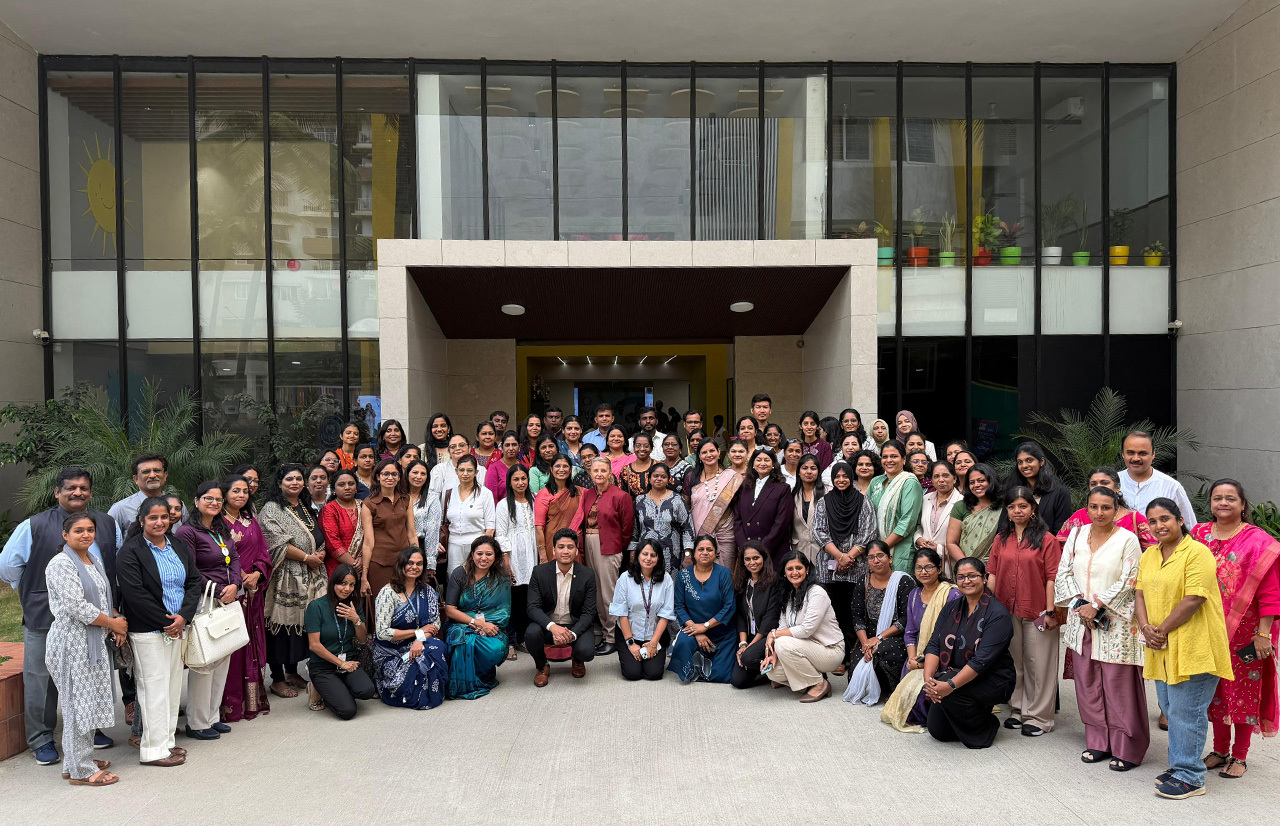
The Leadership Forum concluded with a group photograph session, marking the end of a meaningful and collaborative professional learning experience.