State Presentation on Odisha
Date: 28 August 2026
Timing: 10.45 AM to 11.45 AM
Attendees: G3 to G7 students, Teachers and Parents
Venue: Hindustan Auditorium, Guindy Block
REPORT ON ODISHA STATE PRESENTATION
1. Overview
The Odisha State Presentation was planned as an informative and engaging exploration of the beautiful state of Odisha. The presentation aimed to introduce Odisha’s geography, history, people and culture, government and governance, economy, tourism, wildlife, and sports. It was divided into six major sections, with each team member taking responsibility for a specific topic, which encouraged active participation, teamwork, confidence, and public speaking skills.
The presentation began with an introduction to Odisha as a vibrant state in eastern India, covering its geographical location, area, neighbouring states, mountains, hills, rivers, climate, natural resources, and important cities. The history section focused on ancient Kalinga, the Kalinga War, Emperor Kharavela, and other important historical developments and personalities.
The students then explored the Odia language, religion, festivals, traditional arts, handicrafts, cuisine, and cultural traditions of Odisha. The Government and Governance section introduced democracy, the State Legislative Assembly, Parliament, the Chief Minister, Governor, judiciary, and the importance of good governance.
The Economy section covered agriculture, industries, mineral resources, manufacturing, exports, imports, and trade, highlighting the role of natural resources in Odisha’s development. The final section focused on tourism, wildlife, and sports, featuring famous places such as the Konark Sun Temple, Puri, Jagannath Temple, Chilika Lake, Dhauli Hill, Lingaraja Temple, and Udayagiri and Khandagiri Caves.
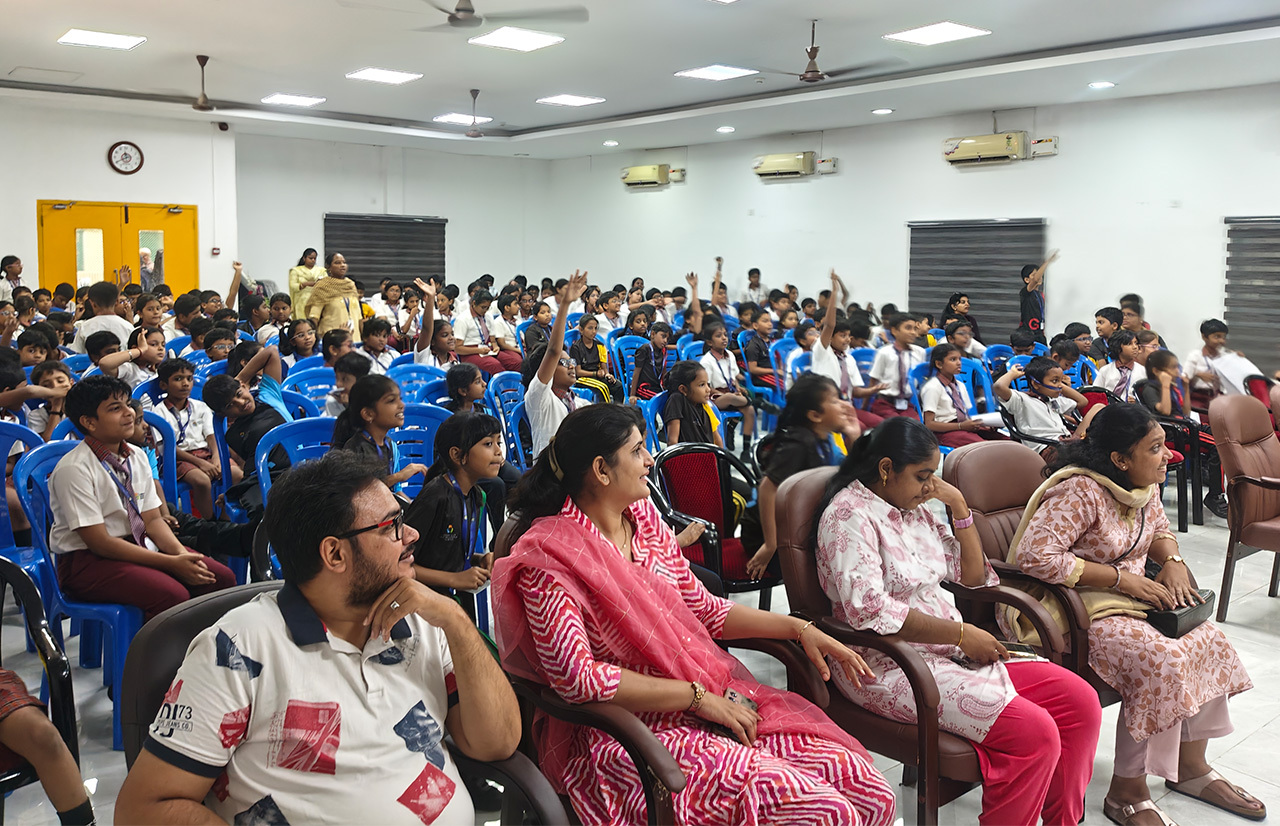
The presentation concluded with an interactive Question-and-Answer session, allowing the audience to recall and respond to key information shared throughout the presentation. Overall, the presentation provided students with an opportunity to enhance their knowledge, teamwork, communication skills, confidence, and appreciation of the rich heritage and diversity of Odisha.
2. Highlights of the Presentation
a. Well-structured content
The presentation followed a clear sequence, covering geography, history, culture, governance, economy, tourism, wildlife, and sports.
b. Effective division of responsibilities
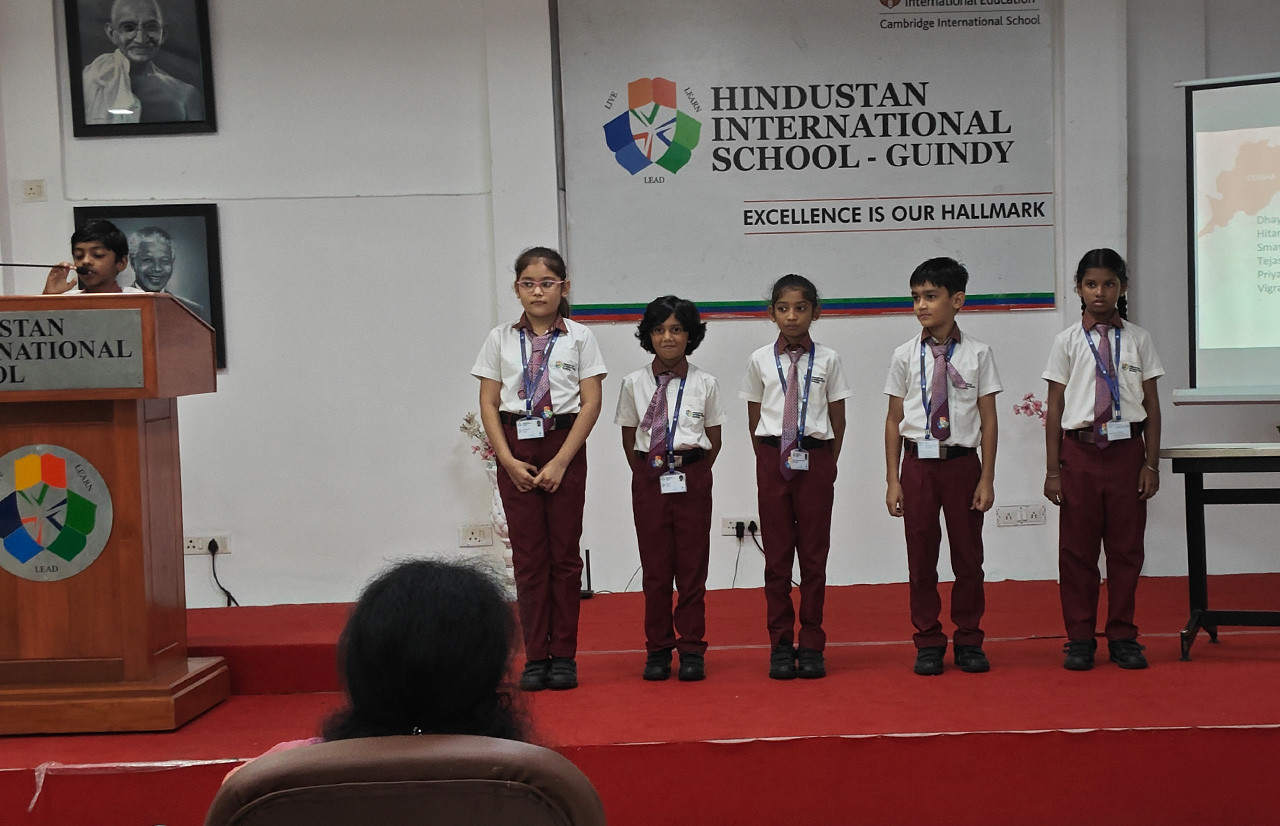
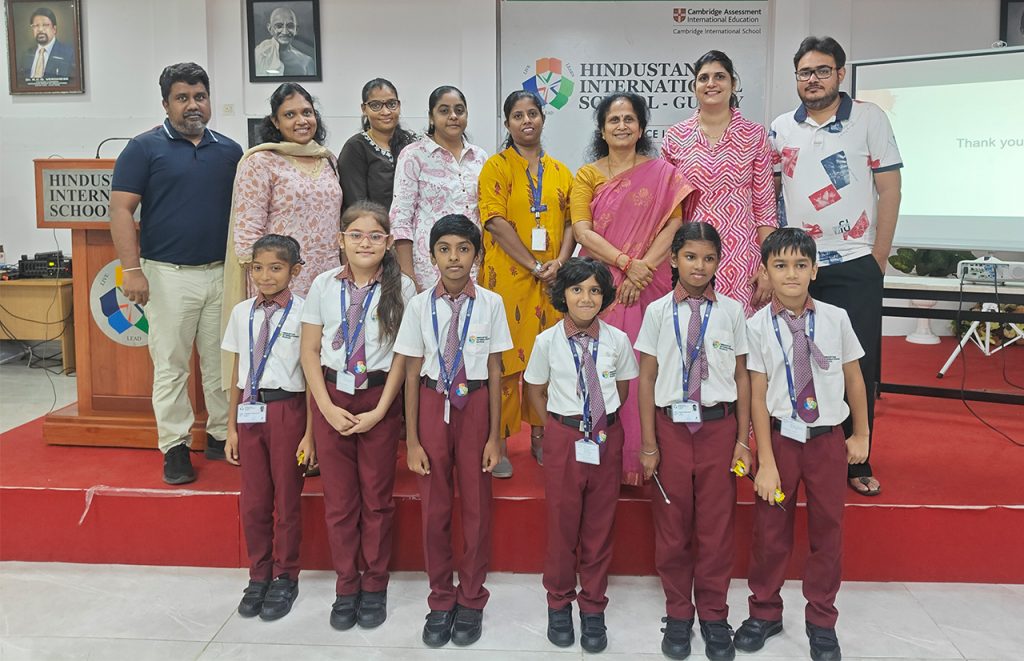
The topics were divided among six students: Dhayaan, Hitanshi, Smaya, Tejashree, Priyank, and Vigrahaa, encouraging teamwork, responsibility, and collaboration.
c. Strong geographical coverage
The students covered Odisha’s location, neighbouring states, mountains, rivers, climate, natural resources, and important cities.
d. Interesting historical content
The presentation highlighted ancient Kalinga, the Kalinga War, Emperor Ashoka, Emperor Kharavela, and modern Odisha.
e. Focus on culture and heritage
The cultural section highlighted Odia language, festivals, Pattachitra, traditional handicrafts, cuisine, and heritage.
f. Economy and natural resources
The students explained the importance of agriculture, minerals, industries, manufacturing, exports, and imports to Odisha’s economy.
g. Visual and multimedia elements
The use of photographs, visuals, and an introductory video made the presentation more engaging and interesting.
h. Interactive Question-and-Answer Session
The concluding Q&A session encouraged audience participation and helped assess their understanding of the presentation.
i. Student skill development
The presentation helped students develop public speaking, communication, teamwork, research, presentation skills, confidence, and leadership.
3. Suggestions for Improvement
Although the presentation covered a wide range of topics effectively, a few improvements could make future presentations more engaging and polished.
a. Reduce the amount of text
Use short points, keywords, images, maps, and diagrams instead of lengthy text on slides. This will help the audience focus on the speaker.
b. Avoid repetition
Coordinate the content between speakers to avoid repeating topics such as Jagannath Temple, Rath Yatra, and cultural heritage.
c. Improve transitions between speakers
Use smooth and confident transition lines so that the presentation flows naturally from one section to another.
d. Increase audience interaction
Include a few simple questions during the presentation, such as “Can anyone identify this place?” or “Can you guess the name of this river?” to keep the audience engaged.
e. Practise timing and delivery
Students should practise their sections to maintain the planned timing and focus on clear speech, eye contact, appropriate pauses, and confident body language.
f. Strengthen the conclusion
End with a brief summary of Odisha’s geography, history, culture, economy, and tourism, leaving the audience with a memorable message about the state.
4. Conclusion
The Odisha State Presentation was a successful and enriching learning experience. It showcased the students’ teamwork, preparation, research, communication, creativity, and confidence while exploring the rich geography, history, culture, economy, and heritage of Odisha. Overall, the presentation helped both the students and the audience gain a deeper appreciation of the beauty and diversity of Odisha.